royalwindowsystem1@gmail.com
 Mon - Fri 8:00 - 18:00 / Sunday 8:00 - 14:00
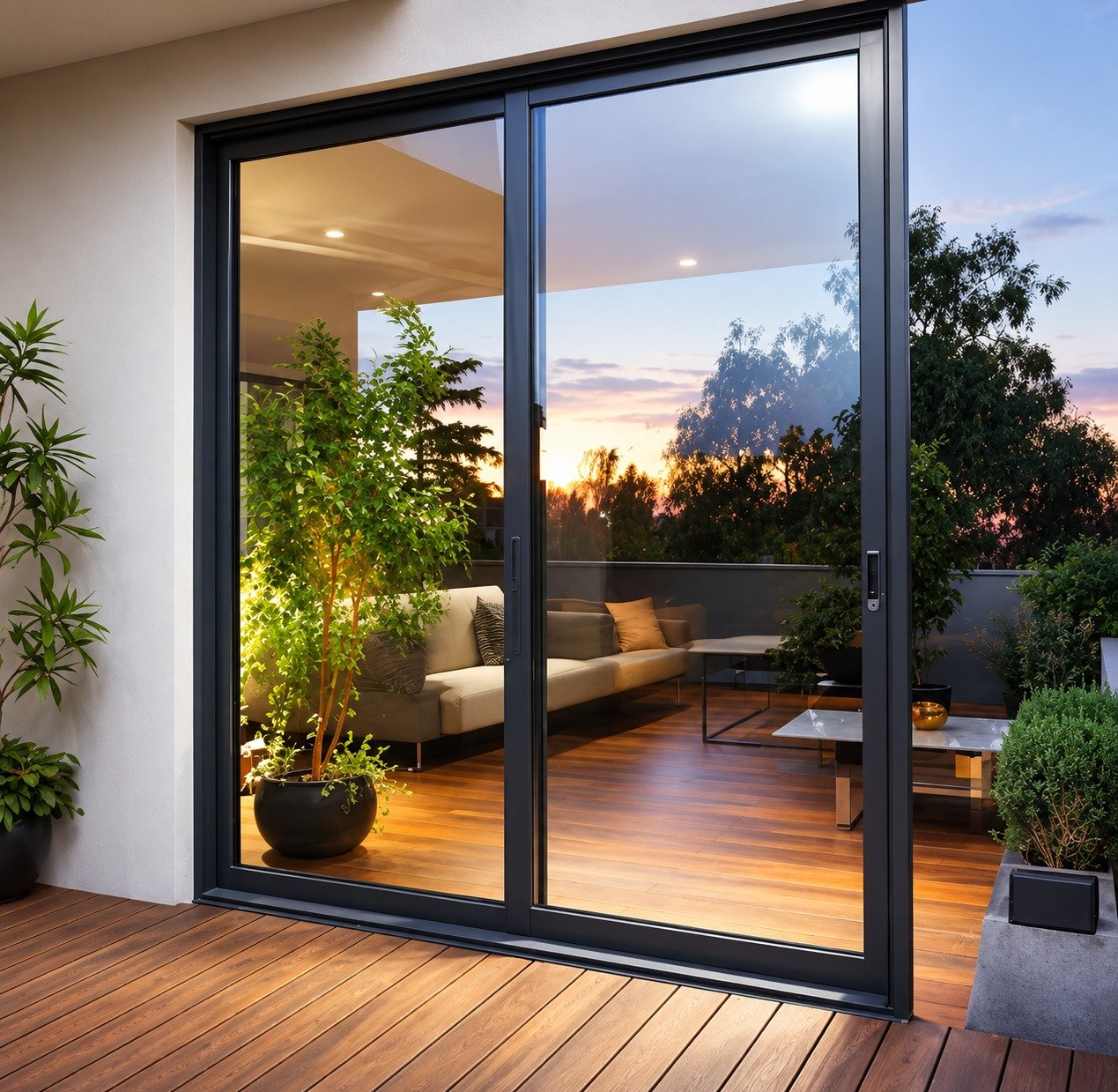
Heavy Duty Patio Doors| Sizes, Features, Cost & Buying Checklist
Patio doors form a connection between your home and the balcony, terrace, garden, or outdoor space. Where the size of the opening is large, strength becomes important. Heavy duty patio doors are meant for large glazed openings and regular movements in Indian conditions.
Key Takeaways
- Make your choice depending on the size of the opening, space available, and the size of the opening you want.
- Check the frame, glass, rollers, locks, seals, drainage, and installation procedure.
- Think about the overall specification of the door and not just the per-square-foot cost.
- When choosing for an Indian home, consider the climate, dust, rain, humidity, ventilation, and security.
- Measure the opening properly before purchasing.
Why Choose Heavy Duty Patio Doors?
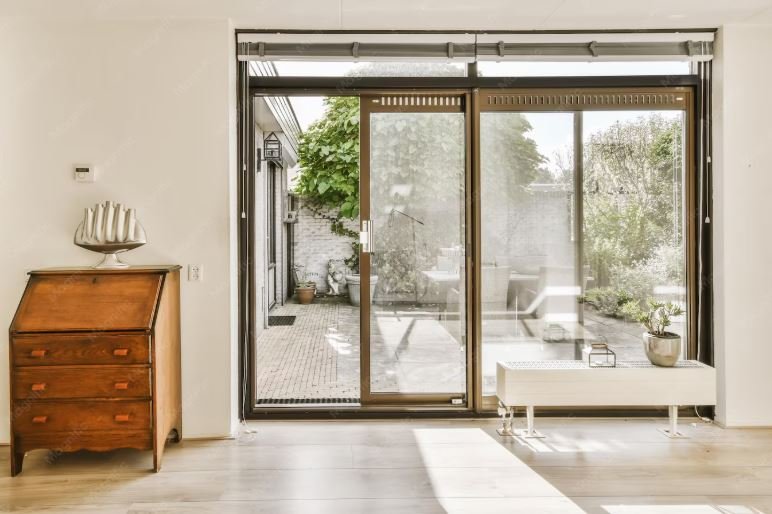
Heavy-duty patio doors work well due to their ability to handle large panels without compromising the sliding operation. The system allows you to create a large link between a living room and a balcony or garden. Sliding doors also help save floor space.
Climate factors should be considered as well. Heat, dust, rain, humidity, and cleaning might affect the door. uPVC material allows water resistance and requires minimal maintenance, while proper glazing and gaskets may help lower heat, dust, air, and noise.
Common Sizes and Configurations
All patio openings do not require one constant size. Medium-size openings feature a two-panel system, while three- and four-panel systems are suited for wide openings. Dimensions will vary based on the structural opening, framing system, weight of panels, and system restrictions.
Balcony door opening sizes in India for a two-panel system are 1200–1800 mm, while for a three-panel system, they are 2100–2700 mm. Large openings should be assessed by the fabricator.
Important Features
Profile and Locking Reinforcement
A strong profile helps provide reliability. Request suitable locking reinforcement based on the door specification and opening size.
Glass
If you have large glazed areas, you may want to consider the installation of suitable safety glass. Toughened glass breaks into small blunt pieces, while laminated glass stays intact because of its interlayer. The use of double glazing can provide additional thermal and acoustic insulation properties.
Rollers and Hardware
Rollers, tracks, handles, and locks help provide an easy sliding motion of the door. Rust-resistant hardware can be useful for humid conditions.
Sealing and Drainage
Proper sealing helps prevent the entry of water and air into the room. Proper drainage is necessary to allow rainwater to escape from the tracks.
Security
Consider the locking arrangement, theft-prevention mechanisms, anti-lift protection, and suitable security glass when selecting the door.
Cost: What Should You Expect?
Cost is different due to the lack of standard specifications. The type of framing material, opening dimensions, panels, glazing, profile, reinforcement, hardware, finishes, installation, and site conditions are among the factors that influence the quotation.
Quotations from the market can vary greatly depending on whether the requirement is for a basic or high-quality patio system. It is wise to request a quotation that breaks down the cost into frames, glazing, hardware, other accessories, freight, installation, and taxes.
Heavy Duty Patio Doors vs. Standard Sliding Doors
This is not just about the term "heavy duty." It refers to the entire specification. The specification of a heavier system might include stronger profiles, reinforcement, rollers with higher capacity, locking mechanisms, and glazing systems for heavier glass panels.
Where there is a need to install a small balcony system, a regular specification system may be suitable. But where there is a requirement for a heavy-duty system, the door should be selected according to the opening size and panel requirements.
Compare the following specifications:
- Dimensions
- Maximum recommended weight
- Roller capacity
- Reinforcement
- Lock system
- Gasket specification
- Glass specification
- Warranty
Buying Checklist
Before placing the order:
- Measure the dimensions of the finished opening.
- Determine the panel number and movement.
- Get the maximum size and weight of the panel.
- Determine the profile and reinforcement.
- Determine the correct glass to be used, which can be toughened or laminated.
- Check the roller and the rail.
- Verify the lock and the anti-lift device.
- Check the gaskets and drainage system.
- Get information on finishes and meshes.
- Get information on installation details and accessories.
- Get the warranty details.
Installation and Local Considerations
The installation of a quality door affects its performance. The frame must be properly aligned, fixed firmly, and tested for easy movement. The sill and drainage need to be considered if there will be frequent rainfall.
In Punjab and other areas in North India, considerations include strong sunshine, dust, monsoons, and variations in temperature.
Frequently Asked Questions
1. Is it possible to use heavy-duty patio doors for balconies?
Yes, such doors are good options when the balcony has a wider entrance and the door will often be used. The installation should be appropriate for the entrance size and door weight.
2. What is the best kind of glass to use for patio doors?
Toughened glass is a popular safety choice. Laminated glass provides further security due to an additional interlayer that holds broken pieces of glass together.
3. How do I know what size patio door to choose?
Measure the finished structural opening and let the fabricator verify the frame size, system limitations, and panel size. Do not order based on an approximate wall measurement.
4. Are sliding patio doors secure?
They can be secure if you specify them properly. Look for good locks, anti-lift devices, strong frames, suitable glazing, and professional installation.
5. Are patio doors costly?
This depends on the size, glass type, hardware, finishing, profile specification, and cost of installation.
6. What are the maintenance requirements for patio doors?
uPVC doors only require basic cleaning and periodic hardware checks. The tracks, rollers, seals, and drainage areas should also be kept clean.
Conclusion
When selecting heavy duty patio doors, there is a need to consider many things, including size, durability, security, aesthetics, weather performance, and cost. Heavy-duty patio doors can be chosen for wide opening areas, and in such cases, they can allow more light into living spaces. It is important to consider the overall door system instead of simply looking for the best quotation.